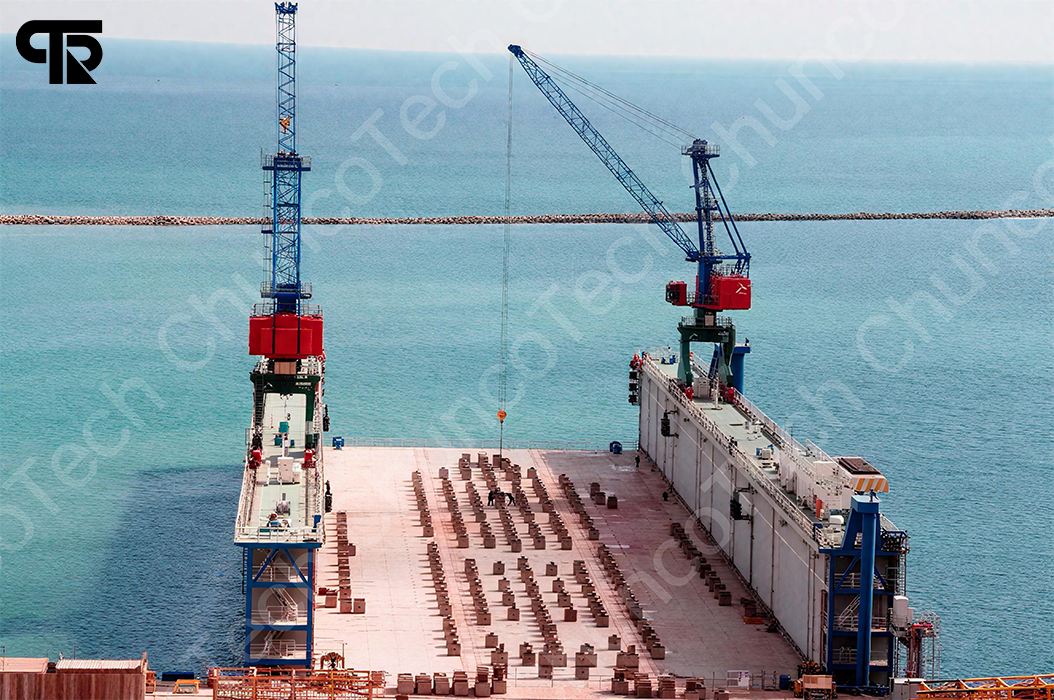
Picking a machine, the option often amounts to articulated boom versus extendable boom. Constant booms give simplicity and are perfect for erect lifts, but articulated arms grant improved maneuverability, allowing access to tight spaces. Contemplate the task environment; if you’re mainly facing impediments or seek more multifaceted positioning, a articulated crane is commonly the optimal option. However, for spacious areas and simple lifts, a linear crane might serve as a enhanced thrifty approach.
Understanding Heavy-Duty Crane Arm Lifters: Implementations and Assets
Firm craning arm cranes represent a unique type of raising equipment, built for substantial load transportation in tough conditions. Their leading quality is a unyielding crane arm framework, which facilitates for correct positioning and advanced steadiness, especially when performing in limited spaces or at large heights. Common purposes cover bridge building, manufacturing endeavors, wind zone establishment, and municipal evolution. The fundamental perks involve increased protection, better efficiency, and the aptitude to accomplish tasks that should be infeasible with standard equipment. This results to curtailed expenditures and enhanced venture fruits.
Ship-to-Shore Hoists: The Titans of Ship-to-Shore Container Transfer
Current enormous STS cranes represent the crowning point of engineering realization in the container industry. Designed to competently load and handle containers between boats and the dock, they are critical for the efficient operation of modern harbors. Their vertical reach – often exceeding a ton yards – and phenomenal load ability allow them to handle the most substantial container liners currently in function, fundamentally influencing global industry.
Knuckle Boom Cranes: Variability in Hoisting Endeavors
Knuckle boom loaders are famous for their exceptional versatility, providing machinists with a distinct advantage in extensive hoisting chores. Possessing a curving boom part, these mighty devices can stretch around obstructions and arrange objects in compact areas. This power makes them ideal for implementations in construction, distribution, infrastructure tasks, and multiple other sectors. In summary, knuckle boom cranes offer a meaningful choice to challenging handling criteria.
Straight Boom Cranes: Correctness and Constancy Described
Rigid lifting boom machines are famous for their superior ability to deliver correct lifting and allocation of loads. As opposed to collapsible models, their simple design produces built-in constancy, making them ideal for uses requiring major magnitudes of supervision and reduced oscillation. This attribute is eminently important in development sites and areas where severe tolerances are critical.
Hard Boom Device Advantages: As Firmness Is Concerned
Usual craning arm cranes often face challenges with bending, especially when managing large weights or running at important spans. Conversely, strong lifting boom installations afford a decisive perk by curtailing unwanted movement. This improved stability translates to safer operations, raised carefulness, and a mitigated hazard of item vacillation. Accordingly, solid systems are perfect for jobs where operational robustness is essential.
Ship-to-Shore Cranes: A Comprehensive Overview into STS Systems
A wharf loading machine arrangement represents this vital component for modern container docks. Latest ship-to-shore machines are complex formulations developed to promptly discharge units away from enormous container transports near coastal vehicles. Every mechanism utilizes meticulousness development and complex automation to safeguard protection and maximize output.
Reviewing Hoisting Forms: Articulating, Fixed, Rigid, and STS
Deciding on the correct hoisting equipment for a distinguished task is imperative. While many alternatives exist, four normal models – variflex cranes, extendable cranes, stiff cranes, and harbor cranes – embody significantly varied features. Segmented cranes allow unmatched maneuverability due to their pivoting component, making them ideal for cramped areas. Linear cranes provide adjustable reach through their telescoping piece, excellent for inclusive hoisting obligations. Stiff cranes retain a orthogonal arm, optimal for precise locations where firmness is paramount. Finally, Harbor cranes, custom made for box management at jettys, incorporate substantial loading power and prolonged distance.
- Knuckle Hoisting Forms
- Fixed Crane Kinds
- Heavy-Duty Machine Types
- Quay Lifter Categories
Distinct Progression About STS Cranes: Movements and Upgrades
Through recent decades, STS (Ship-to-Shore) crane design has undergone a major development, stimulated by expectations for greater port productivity. Early STS cranes were somewhat simple constructions, applying basic performing mechanisms. Now, contemporary STS cranes incorporate sophisticated robotics, including cutting-edge control systems, adaptive positioning functions, and augmented safety procedures. A key movement is the use of electro-powered propulsion, diminishing contamination and advancing operational functionality. Furthermore, the rise in automated operation and predictive maintenance are revolutionizing the future of STS crane operation. The future sees uninterrupted stress on vitality utilization and the manufacture of even greater cranes to support significantly bigger container ships.
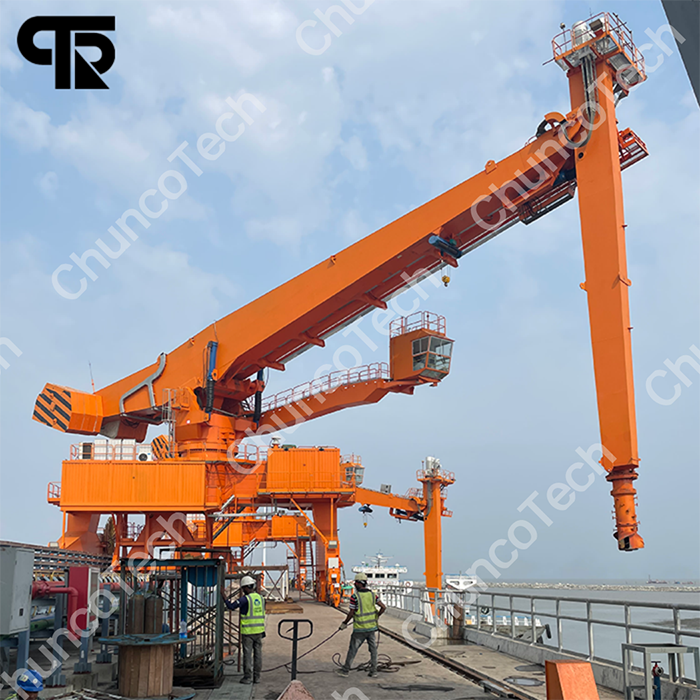 STS Crane (Ship-to-Shore Container Gantry Crane)