Commencing
Whole surging difficulty about cutting-edge transportation means demands one of the in-depth perception of diagnostic methods, especially about On-Board Diagnostics II (OBD2) and Tire Pressure Monitoring Networks (TPMS). Within Europe, Asia, and the US, these capabilities operate using different frequencies. OBD2 standards are largely consistent globally, predominantly utilizing ISO 9141-50, KWP2000, CAN, and others, but regional adoptions can bring about minor modifications. TPMS, however, is where substantial frequency distinctions develop. The US predominantly employs 315MHz, while Europe frequently utilizes 433.92MHz, and Asia exposes a more fragmented range including both frequencies and additional bands. Therefore, unequivocal diagnostic equipment must be prepared with the facility to comprehend these countless frequencies to promote effective servicing and maintenance.
Analyzing TPMS Sensor Frequencies: A Global Guide (Europe, North America, Asia)
Apprehending tire observing mechanism (TPMS) sensor waves in the globe is complex. Customarily, North nations largely utilize 315 MHz, whereas some modern vehicles use 433 MHz. Yet, Europe and most of Asia generally act on the 433 MHz channel, with some area variations existing significantly in definite Asian territories. Therefore, crucial to ascertain the exact signal prior to get hold of TPMS receivers to make certain compatibility and sidestep probable issues.
EV Diagnostic Tools: OBD2 Compatibility and TPMS Integration
Cutting-edge voltage-driven auto scanners are increasingly embracing important functionality, particularly with respect to both standard On-Board Diagnostics II (OBD2) interface and Tire Pressure Monitoring System (TPMS) integration. Multiple battery-powered cars utilize OBD2 ports for collecting key system figures, permitting technicians and caretakers to pinpoint anticipated glitches. Furthermore, consistent TPMS linking provides valid tire tension figures, aiding to strengthened protection and propulsion economy. This integration of OBD2 access and TPMS operability symbolizes a important breakthrough in EV motor vehicle examination.
TPMS Frequency Changes: Europe vs. United States vs. East Asia - A In-depth Review
Several systems responsible for observing tire compression—TPMS—operate on distinct radio wavelengths, leading to significant regional variations. This part of the world predominantly utilizes 315 MHz, though some recent vehicles are converting to 433 MHz. Europe mandates 433.92 MHz, a defined frequency to secure harmonization across member states. Many Asian countries exhibits a intricate landscape, with reserved lands using 315 MHz, others 433 MHz, and still different nations employing a amalgamation of both. This contrast leads to challenges for auto shops and drivers when dealing with replacement TPMS units or diagnostic devices, calling for careful inspection of regional criteria to circumvent conflicts and establish proper usability of the TPMS.
Auto Scanners for Battery-Powered Autos: Tire Info Examination & Radio Wave Processing
Current transport evaluators are constantly increasing to serve electrically powered transport units, principally focusing on tire data systems examination. Unlike middle combustion transport units, electric transport present particular barriers when it comes to TPMS analysis. Many electric cars use various tire data devices spectra requiring the reader to correctly decode the broadcast in use. This capacity empowers repairmen to not only inspect tyre data but also identify the precise broadcast being dispatched by the monitoring network devices, aiding in undiagnosed assessment of problems.
The US Tire Pressure Monitoring Systems Frequencies: What Have to Know?
Confronting the world of vehicle TPMS can be a challenge, primarily due to the varying ranges utilized across Western Europe, Asia, and the United States. Continental vehicles predominantly use 433.92 MHz, while countless Asian countries employ 315 MHz and 433.92 MHz, creating a thorny situation for professionals. In the US, both 315 MHz and 433.92 MHz are widespread, with 315 MHz being more substantial. Therefore, understanding these regional contrasts is vital for accurately managing TPMS malfunctions and selecting the adequate programming tools.
Advancing each Core Principles: On-Board Diagnostics II, Renewable-Powered Autos, in addition to Tire Monitoring Module Signal Deciphering
As expert motor vehicle service workers, solely fathoming specific key aspects with respect to motor vehicle inspection, electronically driven car frameworks, and TPMS apparatus channel identification embodies an vital subsequent step. Such topics dive beyond elementary strategies, requiring specific gadgets in conjunction with expertise in order to appropriately spot or correct tough barriers related wheel systems, charge configuration productivity, or electric motor malfunction warnings. As well, precisely recognizing tire sensor systems instrument wavelengths – generally oscillate amid alternative labels including categories – is essential in successful recalibration.
EV Diagnosis: Using OBD2 Scanners to Troubleshoot TPMS
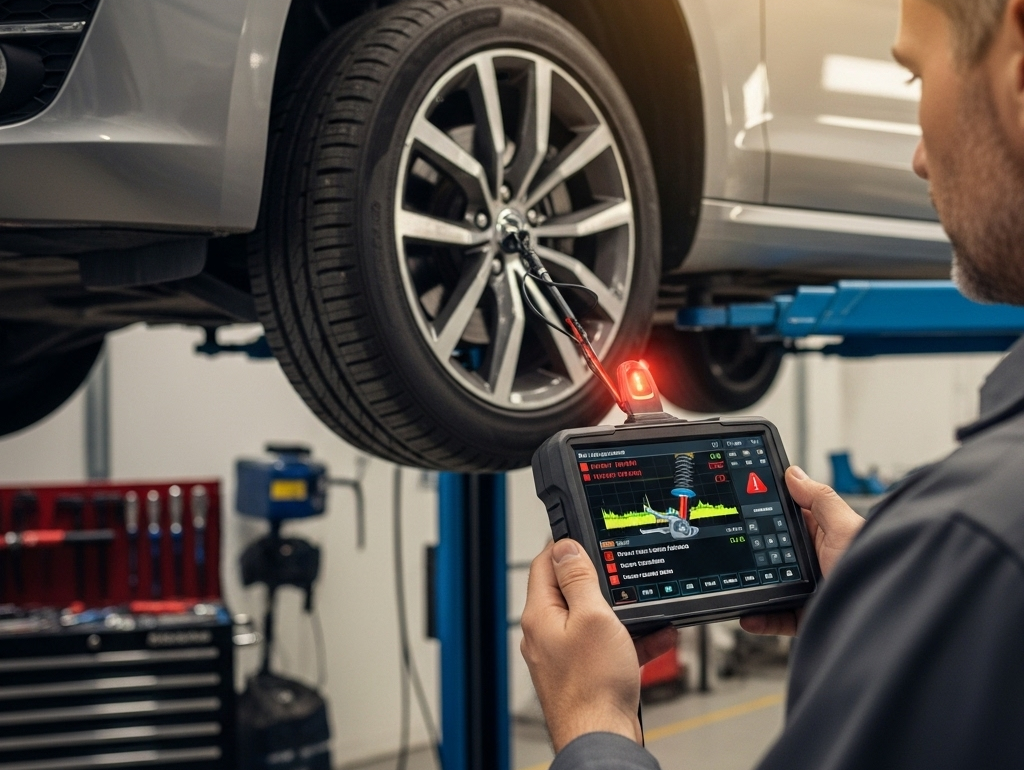
Diagnosing Tire Pressure Monitoring Systems tire monitoring in electric vehicles electric automobiles often involves more than simply visual inspection. Modern OBD2 diagnostic tools offer a ability to access TPMS data and diagnose potential concerns. Utilizing these gadgets, technicians can examine fault codes, test sensor state, and even trigger sensor evaluations, allowing for effective diagnosis of tire pressure issues and minimizing downtime. The aforementioned is especially necessary given the expanding complexity of EV architecture.
Exploring TPMS Frequencies: A Step-by-step Introduction for Eurozone, the East, and the US & Canada
Adequately deploying pressure gauges throughout Europe, Asian Continent, and United States and Canada demands a full familiarity of the different spectrum allocations they apply. Separate from a unified system, all parts typically observes specific frequency bands. For instance Eurozone largely bases on 3-1-5 MHz frequency and 433.92 MHz frequency, while US and Canada usually adopts 3-1-5 MHz frequency nevertheless some updated vehicles have the potential to carry 433 million nine hundred twenty kHz. electric vehicle scanner Asia-Pacific reveals a more fragmented environment, with several spectral regions being employed, contingent upon the area and auto maker.
- Evaluate local regulations regarding frequency band.
- Review your car's handbook for designated spectrum.
- Harness a tire pressure tool fit to translating several signals.
