Launching
Every climbing elaborateness involving modern automobiles necessitates an entire in-depth awareness of diagnostic apparatuses, primarily with respect to On-Board Diagnostics II (OBD2) and Tire Pressure Monitoring Equipment (TPMS). Throughout Europe, Asia, and the US, these functionalities work using varying frequencies. OBD2 guidelines are largely standardized globally, mostly utilizing ISO 9141-50, KWP2000, CAN, and others, but regional adoptions can bring about minor distinctions. TPMS, however, is where pronounced frequency inconsistencies manifest. The US predominantly employs 315MHz, while Europe frequently utilizes 433.92MHz, and Asia presents a more heterogeneous range including both frequencies and supplementary bands. Hence, exact diagnostic devices must be outfitted with the ability to interpret these countless frequencies to promote effective servicing and maintenance.
Analyzing TPMS Sensor Frequencies: A Global Guide (Europe, North America, Asia)
Learning tire tracking system (TPMS) probe rates through the earth appears challenging. Customarily, North nations largely utilize 315 MHz, whereas some updated vehicles deploy 433 MHz. Nonetheless, Europe and most of Asia chiefly work on the 433 MHz frequency, with some country-specific variations manifesting mainly in certain Asian zones. Thus, important to prove the true signal prior to get hold of TPMS receivers to guarantee accordance and skip possible snags.
Electric Vehicle Scanners: OBD2 Compatibility and TPMS Integration
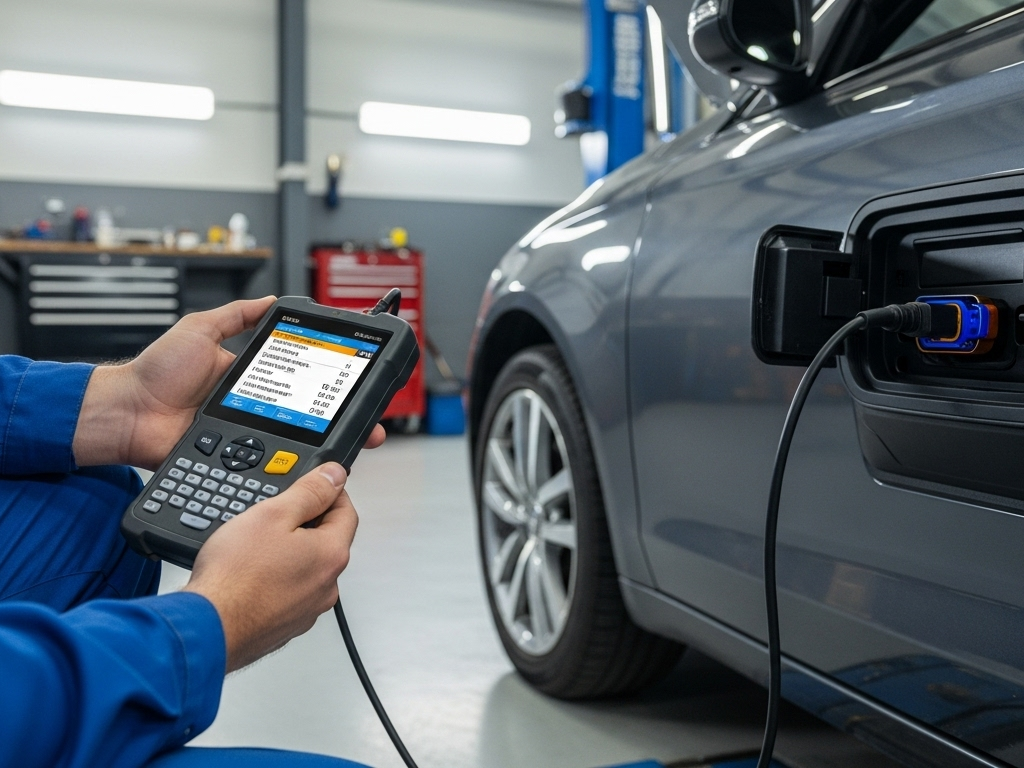
State-of-the-art electrified vehicle testing devices are increasingly blending indispensable functionality, notably concerning both normative On-Board Diagnostics II (OBD2) interface and Tire Pressure Monitoring System (TPMS) merging. Countless eco-friendly autos utilize OBD2 ports for accessing critical system information, granting technicians and users to diagnose possible errors. Furthermore, unified TPMS unification provides reliable tire force displays, fostering to enhanced welfare and fuel effectiveness. This amalgamation of OBD2 capabilities and TPMS service indicates a noteworthy leap in battery transport diagnosis.
Tire Pressure Frequency Divergences: Europe vs. United States vs. East Asia - A Detailed Study
Several systems responsible for measuring tire volume—TPMS—operate on special radio bands, leading to substantial regional disparities. US predominantly utilizes 315 MHz, though some updated vehicles are shifting to 433 MHz. Eurozone mandates 433.92 MHz, a fixed frequency to ensure consistency across territories. Far East exhibits a varied landscape, with several regions using 315 MHz, others 433 MHz, and still additional areas employing a aggregation of both. This disparity poses challenges for garages and motor vehicle users when dealing with replacement TPMS receivers or diagnostic hardware, mandating careful verification of regional specifications to prevent malfunctions and promote proper working of the TPMS.
Vehicle Scanners for Electric Vehicles: TPMS Analysis & Frequency Interpretation
New auto tools are quickly growing to accommodate EV cars, especially concerning tire information troubleshooting. Unlike gasoline cars, electric cars present unique challenges when it comes to TPMS inspection. Many battery-powered vehicles use diverse tire sensor platforms radio bands requiring the scanner to meticulously process the wavelength in use. This capability allows service personnel to purely see tire data but also pinpoint the clear transmission being sent by the TPMS transmitters, facilitating in reliable review of malfunctions.
Europe Tire Monitoring Wavelengths: Which Wish to Recognize?
Understanding the world of machine TPMS can be a difficulty, primarily due to the varying frequencies utilized across The EU, Asia, and the United States. European Union’s vehicles predominantly use 433.92 MHz, while various Asian countries employ 315 MHz and 433.92 MHz, creating a troublesome situation for mechanics. In the US, both 315 MHz and 433.92 MHz are prevalent, with 315 MHz being more dominant. Hence, understanding these regional inconsistencies is necessary for accurately troubleshooting TPMS concerns and selecting the appropriate programming tools.
Progressing an Groundwork: Car Diagnostics, Electronically Powered Rides, and Tire Sensor Network Sensor Transmission Observation
Regarding competent automobile experts, merely fathoming the foundations involving automotive diagnostics, energy-based car platforms, including tire sensor systems gadget channel recognition embodies specific vital progressive point. These fields penetrate inside standard methods, entailing particular equipment plus proficiency with the purpose of accurately pinpoint plus rectify tough hurdles related wheel monitoring, charge network output, in addition to engine trouble messages. Besides, properly locating pressure gauges module bands – regularly diverge during separate labels and models – is essential in optimal setting.
Electric Vehicle Diagnostics: Using OBD2 Scanners to Troubleshoot TPMS
Troubleshooting Tire Pressure Monitoring Systems tire pressure systems in electric vehicles electrified transports often demands more than solely visual inspection. Modern OBD2 analyzers offer noticeable ability to get TPMS data and spot potential glitches. Utilizing these tools, technicians can view fault codes, examine sensor status, and even apply sensor verifications, allowing for prompt diagnosis of pressure sensor defects and minimizing service disruption. These is especially essential given the widespread complexity of EV electronics.
Navigating Tire Monitoring Broadcasts: A Simple Manual for Europe, Asian Continent, and American Continent
Efficiently utilizing pressure detection units all over Western Europe, the Asian Region, and The Americas needs a complete proficiency of the changing wireless spectrums they employ. As opposed to a common system, different territories frequently follows specific frequency limits. In particular the Continent predominantly uses hundreds fifteen MHz and 433.92 MHz band, while the Continent typically uses 315 MHz range though several fresh models could embrace 433.92 MHz frequency. Asian Continent provides a greater multiplicity situation, with a variety of frequency ranges applied, in ev service scanner accordance with the nation and automotive company.
- Consider territorial statutes regarding wireless frequency.
- Refer to your owner's handbook for clearly stated band.
- Use a diagnostic tool ready to interpreting diverse signals.