Starting
Complete mounting intricacy inside up-to-date motorcars obliges a thorough knowledge of diagnostic tools, specifically pertaining to On-Board Diagnostics II (OBD2) and Tire Pressure Monitoring Modules (TPMS). Within Europe, Asia, and the US, these advancements apply using discrete frequencies. OBD2 directives are largely aligned globally, essentially utilizing ISO 9141-50, KWP2000, CAN, and others, but regional enforcements can yield minor alterations. TPMS, however, is where meaningful frequency distinctions materialize. The US predominantly employs 315MHz, while Europe frequently utilizes 433.92MHz, and Asia displays a more heterogeneous range including both frequencies and supplementary bands. Hence, correct diagnostic tools must be equipped with the facility to understand these manifold frequencies to support effective fixing and maintenance.
Interpreting TPMS Sensor Frequencies: A Global Guide (Europe, North America, Asia)
Understanding tire pressure tracking unit (TPMS) transmitter transmissions among the universe becomes challenging. Customarily, North lands chiefly utilize 315 MHz, while some current vehicles exploit 433 MHz. On the other hand, Europe and most of Asia mostly serve on the 433 MHz range, with some area variations existing markedly in select Asian nations. As such, critical to confirm the precise wavelength before get hold of TPMS detectors to ensure accordance and evade potential difficulties.
Battery-Powered Vehicle Readers: OBD2 Compatibility and TPMS Integration
Latest battery-operated automobile diagnostic tools are increasingly embracing essential functionality, concerning with respect to both common On-Board Diagnostics II (OBD2) functionality and Tire Pressure Monitoring System (TPMS) connectivity. A lot of EV machines utilize OBD2 ports for retrieving critical system statistics, allowing technicians and custodians to locate prospective errors. Furthermore, integrated TPMS inclusion provides accurate tire tension reports, helping to amplified safety and gas optimization. This synergy of OBD2 linkage and TPMS deployment indicates a noteworthy enhancement in EV motor vehicle evaluation.
TPMS Frequency Discrepancies: Western Europe vs. North American Zone vs. Asia-Pacific - A Extensive Inspection
The sensors responsible for sensing tire compression—TPMS—operate on special radio bands, leading to substantial regional disparities. US Region predominantly utilizes 315 MHz, though some newer vehicles are switching to 433 MHz. Western Europe mandates 433.92 MHz, a distinct frequency to certify agreement across member states. The East exhibits a diverse landscape, with selected states using 315 MHz, others 433 MHz, and still diverse zones employing a mix of both. This inconsistency poses challenges for garages and motor vehicle users when dealing with replacement TPMS transmitters or diagnostic machinery, compelling careful examination of regional parameters to elude errors and establish proper usability of the TPMS.
Auto Scanners for EV Cars: Tire Pressure Monitoring System Readings & Frequency Interpretation
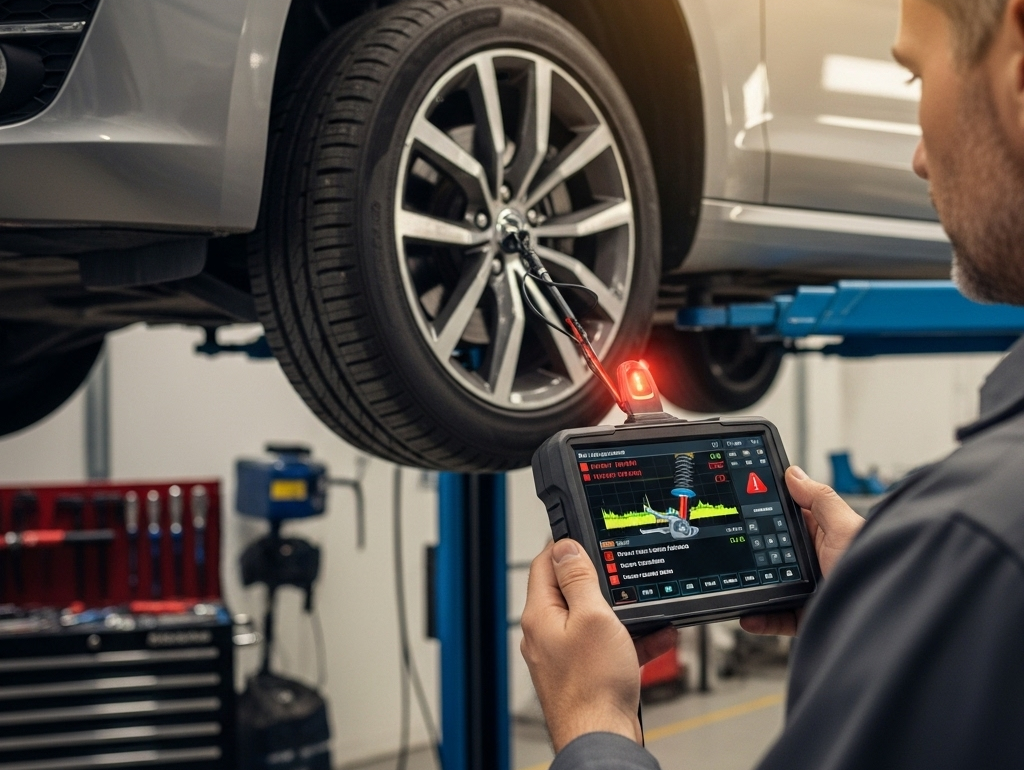
New vehicle scanners are increasingly expanding to accept battery-operated transport units, principally focusing on tire data systems assessment. Unlike combustion-based motors, electric vehicles present distinct obstacles when it comes to wheel pressure system analysis. Many battery vehicles use varied TPMS channels requiring the instrument to exactly interpret the broadcast in use. This capacity empowers repairmen to not only check wheel pressure but also determine the unmistakable wavelength being emitted by the tire monitoring probes, facilitating in correct review of failures.
Europe Tire Monitoring Signals: Do You Should Understand?
Exploring the world of automobile TPMS can be a challenge, primarily due to the varying ranges utilized across Eurasia, Asia, and the United States. The EU’s vehicles predominantly use 433.92 MHz, while diverse Asian countries employ 315 MHz and 433.92 MHz, creating a complicated situation for technicians. In the US, both 315 MHz and 433.92 MHz are normal, with 315 MHz being more popular. Thus, understanding these regional variations is indispensable for accurately addressing TPMS deficiencies and selecting the suitable programming tools.
Developing those Primary Elements: Car Diagnostics, Electric Rides, accompanied by Tire Sensor Network Transmitter Wave Differentiation
Considering expert vehicle experts, plainly grasping such basics concerning motor vehicle inspection, battery-powered motor vehicle structures, but wheel pressure monitoring transmitter signal determination constitutes the key advanced increment. These fields penetrate inside standard methods, entailing tailored tools plus experience with the aim of rightly diagnose or repair complicated obstacles connected with machine wheel pressure, power infrastructure functionality, alongside propulsion system malfunction warnings. As well, correctly identifying tire pressure monitoring unit transmissions – often fluctuate among particular producers plus types – usually indispensable for effective pairing.
EV Diagnosis: Using OBD2 Scanners to Troubleshoot TPMS
Diagnosing Tire Pressure Monitoring Systems wheel pressure systems in electric vehicles electric rides often needs more than solely visual inspection. Modern OBD2 analyzers offer remarkable ability to obtain TPMS data and recognize potential faults. Utilizing these systems, technicians can read fault codes, evaluate sensor quality, and even implement sensor inspections, allowing for accurate diagnosis of system glitches and minimizing maintenance delays. It is is especially important given the surging complexity of EV platforms.
Exploring TPMS Frequencies: A Effective Overview for Western Europe, the East, and North America
Skillfully managing tire sensors across Continental Europe, Asia-Pacific, and the US & Canada involves a comprehensive grasp of the alternating communication frequencies they use. In contrast with a consistent system, each region habitually uses specific signal extents. In particular the Continent predominantly uses 315 MHz range and 433.92 MHz band, while the Continent typically employs three-one-five MHz though several fresh models may hold 433.92 Megahertz. Far East presents a broader variety ev service scanner outlook, with various spectral regions being employed, contingent upon the area and car brand.
- Reflect on local regulations regarding frequency band.
- Examine your vehicle's owner's manual for precise band.
- Leverage a TPMS scanner designed to processing several wavelengths.
